Article: Full Spectrum Infrared vs Far Infrared: What Most Sauna Brands Won’t Tell You
Full Spectrum Infrared vs Far Infrared: What Most Sauna Brands Won’t Tell You
If you have spent any time researching infrared saunas, you have almost certainly encountered two terms: far infrared and full spectrum infrared. Most brands use these terms interchangeably or dismiss the distinction as marketing. They are wrong — and understanding why matters significantly if you are serious about what you put your body through and what you expect from your recovery.
This article breaks down the science of infrared wavelengths, explains what each one does inside your body at a biological level, and tells you exactly why the distinction between far infrared only and full spectrum infrared is not a marketing detail. It is a physiological one.
What Is Infrared Light?
Infrared light is electromagnetic radiation that sits just beyond the red end of the visible light spectrum. The human eye cannot detect it, but the body responds to it profoundly. Unlike a traditional sauna — which heats the air around you to temperatures of 80 to 100 degrees Celsius, warming your body secondarily through convection — infrared wavelengths pass directly through air and are absorbed by your tissue. Your body is heated from the inside out, not the outside in.
This distinction matters for therapeutic benefit. Traditional sauna heat is primarily a surface phenomenon. Infrared heat is a tissue phenomenon.
Infrared light is divided into three biologically relevant bands based on wavelength:
- Near infrared (NIR): 700 to 1,400 nanometres
- Mid infrared (MIR): 1,400 to 3,000 nanometres
- Far infrared (FIR): 3,000 to 10,000 nanometres
Each band interacts with your body at a different depth and through a different biological mechanism. A far infrared only sauna delivers one band. A full spectrum sauna delivers all three simultaneously.
Far Infrared: What It Does and What It Cannot Do
Far infrared is the longest wavelength in the therapeutic infrared range. Its primary mechanism is thermal — it penetrates several centimetres into soft tissue, elevating core body temperature and triggering the physiological responses associated with heat stress.
The research base for far infrared is genuinely strong. The landmark Kuopio Ischaemic Heart Disease Risk Factor Study — a prospective cohort study tracking 2,315 Finnish men over 20 years, published in JAMA Internal Medicine by Laukkanen et al. in 2015 — found that men who used a sauna four to seven times per week had a 63% lower risk of sudden cardiac death compared to those who used one once per week. A 2024 meta-analysis published in the European Journal of Preventive Cardiology, reviewing 17 studies involving 2,264 participants, found that regular infrared sauna use improved arterial function by 24 to 36% after four weeks of consistent use.
Far infrared also activates heat shock proteins — molecular chaperones that assist in cellular repair and stress response — and elevates heart rate to between 100 and 120 beats per minute, providing a cardiovascular load comparable to moderate aerobic exercise. For detoxification, far infrared encourages significant sweating that research has shown facilitates the excretion of heavy metals and environmental toxins through the skin.
These are real and well-documented benefits. The problem is not that far infrared does not work. The problem is what far infrared cannot do — and what most brands will not tell you about.
Far infrared wavelengths are too long to be absorbed by the mitochondria. They do not stimulate cellular energy production at the molecular level. They do not trigger the photobiomodulation response that drives collagen synthesis and accelerated wound repair. And they do not penetrate soft tissue in the way mid infrared does to address circulation, joint health and inflammatory pathways at that intermediate depth.
A far infrared only sauna gives you one tool. A full spectrum sauna gives you three.
Near Infrared: The Cellular Repair Wavelength
Near infrared is the shortest wavelength in the therapeutic range and the one most brands either omit entirely or mention only in passing. This is a significant oversight, because near infrared has one of the most robust evidence bases in all of photomedicine.
Near infrared wavelengths — particularly in the 810 to 850 nanometre range — are absorbed by cytochrome c oxidase, a photoreceptor enzyme in the mitochondrial electron transport chain. This absorption stimulates the production of adenosine triphosphate, or ATP — the primary energy currency of the cell. More ATP means faster cellular repair, improved cellular metabolism and reduced oxidative stress.
This process is called photobiomodulation, and it is the same mechanism that underlies red light therapy — a modality that has accumulated over 3,000 peer-reviewed studies. When you use a full spectrum infrared sauna, you are receiving photobiomodulation as an integrated component of your session, not as a separate protocol requiring a different device.
The practical implications for athletes and individuals who train hard are significant. Near infrared has been shown in peer-reviewed research to reduce markers of muscle damage, accelerate the clearance of exercise-induced inflammation, support collagen synthesis for connective tissue repair and improve skin integrity through increased fibroblast activity. A 2023 study published in Biology of Sport by Ahokas et al. found that post-exercise infrared sauna sessions significantly reduced subjective muscle soreness and improved perceived recovery in trained athletes — a finding consistent with the known mechanisms of both near and far infrared working in combination.
Near infrared also supports neurological recovery. Research published in the journal Photomedicine and Laser Surgery has documented near infrared's role in neuroprotection and cognitive function, with mechanisms involving reduced neuroinflammation and improved mitochondrial function in neural tissue.
Far infrared does not reach the mitochondria. It cannot produce these effects. They require the specific wavelength — near infrared — and they require a sauna that actually delivers it.
Mid Infrared: The Overlooked Middle Wavelength
Mid infrared sits between near and far in terms of wavelength and between skin depth and deep tissue in terms of penetration. It is, as some researchers have described it, the bridge wavelength — and it is the one most frequently absent from conversations about infrared therapy.
Mid infrared wavelengths are absorbed primarily by water molecules in soft tissue. This absorption elevates the temperature of the water in your muscle and connective tissue, expanding blood vessels and significantly increasing local circulation. The clinical relevance of this is substantial for anyone dealing with soft tissue stiffness, chronic joint discomfort or the residual tightness that accumulates with consistent training load.
Research has documented mid infrared's specific role in improving soft tissue extensibility and reducing the inflammatory mediators associated with joint-based chronic pain. A study published in the Journal of Alternative and Complementary Medicine found that mid infrared therapy produced significant reductions in chronic low back pain and improved functional mobility in participants compared to control conditions.
For athletes, mid infrared's ability to increase circulation in soft tissue during the session means your muscles are receiving enhanced nutrient and oxygen delivery simultaneously with the thermal and photobiomodulation effects of the other wavelengths. You are not simply warming tissue — you are actively improving the environment in which repair takes place.
Why Most Brands Sell Far Infrared Only
The commercial reality is straightforward. Far infrared heaters are significantly cheaper to manufacture than full spectrum systems that include properly calibrated near infrared delivery. Most sauna brands are optimising for margin. They tell you far infrared is sufficient because far infrared is what they can afford to put in their product.
The claim that full spectrum is unnecessary typically comes with one of two arguments: that near infrared cannot be meaningfully delivered through a sauna heater at the distances involved, or that far infrared alone provides all the benefits a consumer needs.
The first argument has merit as a critique of low-quality full spectrum saunas that use inadequate near infrared emitters. It is not a valid argument against properly engineered full spectrum systems that use high-output near infrared delivery. The second argument ignores the entirely separate and well-documented biological mechanisms of near infrared photobiomodulation, which far infrared simply cannot replicate regardless of temperature or duration.
Buying a far infrared only sauna and expecting full spectrum benefits is not a compromise. It is a category error.
Full Spectrum: The Complete Physiological Picture
A properly engineered full spectrum infrared sauna delivers all three wavelengths in a single session. The physiological result is a simultaneous, multi-depth therapeutic response:
At the skin and cellular level — near infrared stimulates mitochondrial ATP production, accelerates cellular repair, drives collagen synthesis and reduces oxidative stress through photobiomodulation.
At the soft tissue level — mid infrared increases circulation, reduces inflammatory mediators in muscle and connective tissue, improves joint mobility and creates the optimal tissue environment for recovery.
At the deep tissue and systemic level — far infrared elevates core temperature, activates heat shock proteins, drives significant sweating for detoxification, conditions the cardiovascular system and triggers the broad systemic benefits documented across decades of sauna research.
These mechanisms are not redundant. They are additive. You are not getting more of the same thing with full spectrum — you are getting three distinct biological processes working at three different depths simultaneously.
The Research Summary
The evidence for full spectrum infrared sauna therapy draws on a well-established body of peer-reviewed literature:
- Laukkanen et al. (2015). JAMA Internal Medicine. 2,315 participants. 20-year follow-up. 63% reduction in sudden cardiac death with frequent sauna use.
- European Journal of Preventive Cardiology (2024). Meta-analysis of 17 studies. 2,264 participants. 24 to 36% improvement in arterial function after four weeks.
- Ahokas et al. (2023). Biology of Sport. Post-exercise infrared sauna sessions significantly reduced muscle soreness and improved perceived recovery in resistance-trained athletes.
- Journal of Alternative and Complementary Medicine. Mid infrared therapy produced significant reductions in chronic low back pain and improved functional mobility.
- Photobiomodulation research base. Over 3,000 peer-reviewed studies on near infrared photobiomodulation, documenting cellular energy production, inflammation reduction, collagen synthesis and neuroprotective effects.
What This Means for You
If your goal is genuine physiological recovery — not just warmth and relaxation — the wavelength composition of your sauna is not a secondary consideration. It is the primary one.
Far infrared alone will give you cardiovascular conditioning, deep tissue heat and detoxification support. These are real benefits worth having. But they represent one third of the therapeutic picture.
Full spectrum infrared gives you cellular repair, soft tissue recovery and systemic conditioning simultaneously. It is the complete tool for the athlete, the high performer and anyone who treats recovery as an integral part of the training process — not an afterthought.
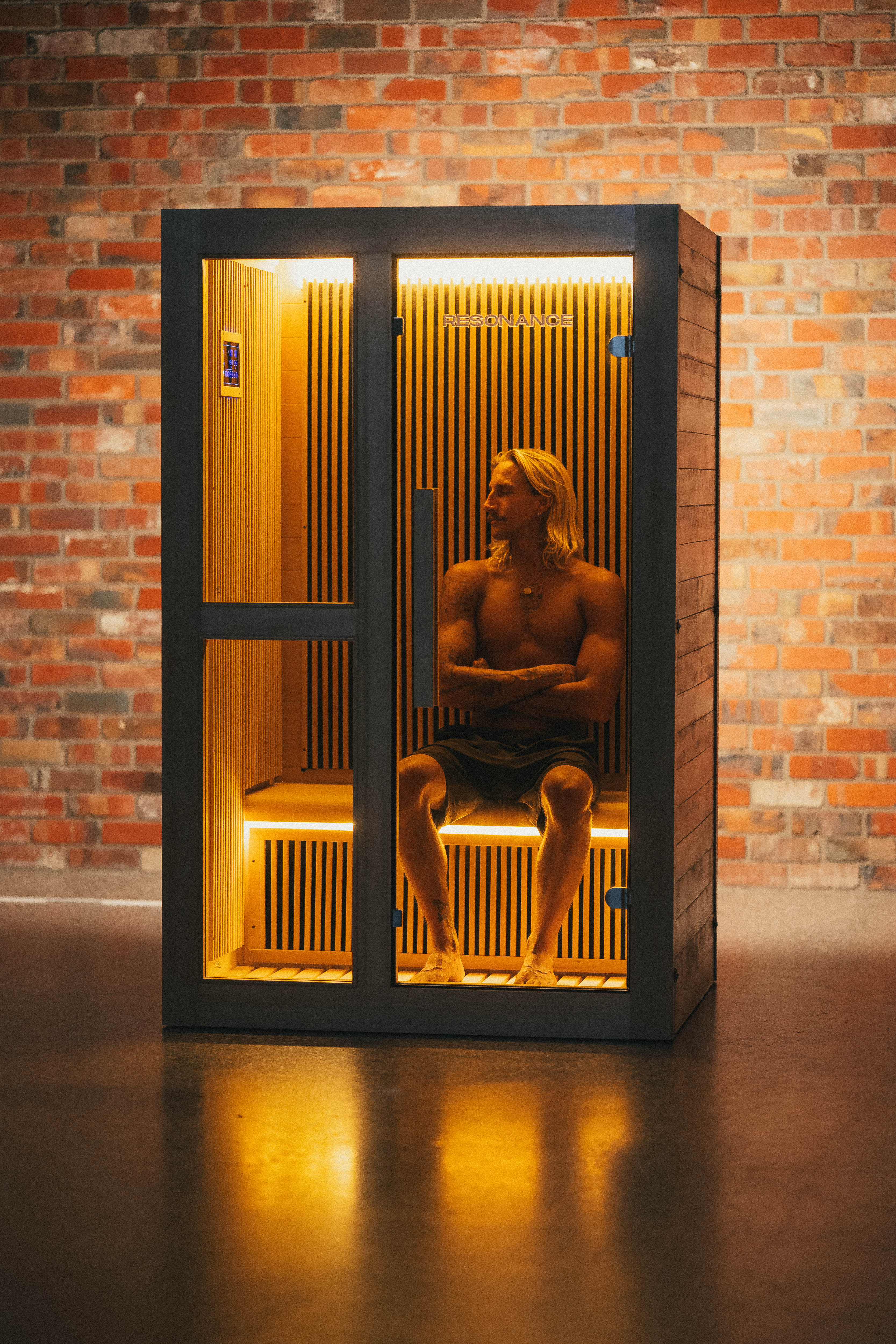
The Resonance Recovery Pod delivers full spectrum infrared. Near. Mid. Far. Every session. Because recovery that leaves anything on the table is not recovery — it is compromise.
Sources
Laukkanen, J.A., Laukkanen, T., Kunutsor, S.K. (2018). Cardiovascular and Other Health Benefits of Sauna Bathing: A Review of the Evidence. Mayo Clinic Proceedings, 93(8), 1111–1121.
Laukkanen, T., Khan, H., Zaccardi, F., Laukkanen, J.A. (2015). Association Between Sauna Bathing and Fatal Cardiovascular and All-Cause Mortality Events. JAMA Internal Medicine, 175(4), 542–548.
Ahokas, E.K., Ihalainen, J.K., Hanstock, H.G., Savolainen, E., Kyröläinen, H. (2023). A post-exercise infrared sauna session improves recovery of neuromuscular performance and muscle soreness after resistance exercise training. Biology of Sport, 40(3), 681–689.
Laukkanen, J.A., Kunutsor, S.K. (2024). The multifaceted benefits of passive heat therapies for extending the healthspan: A comprehensive review with a focus on Finnish sauna. Temperature: Multidisciplinary Biomedical Journal.
European Journal of Preventive Cardiology (2024). Meta-analysis of infrared sauna use and arterial function. 17 studies, 2,264 participants.
Hamblin, M.R. (2017). Mechanisms and applications of the anti-inflammatory effects of photobiomodulation. AIMS Biophysics, 4(3), 337–361.